
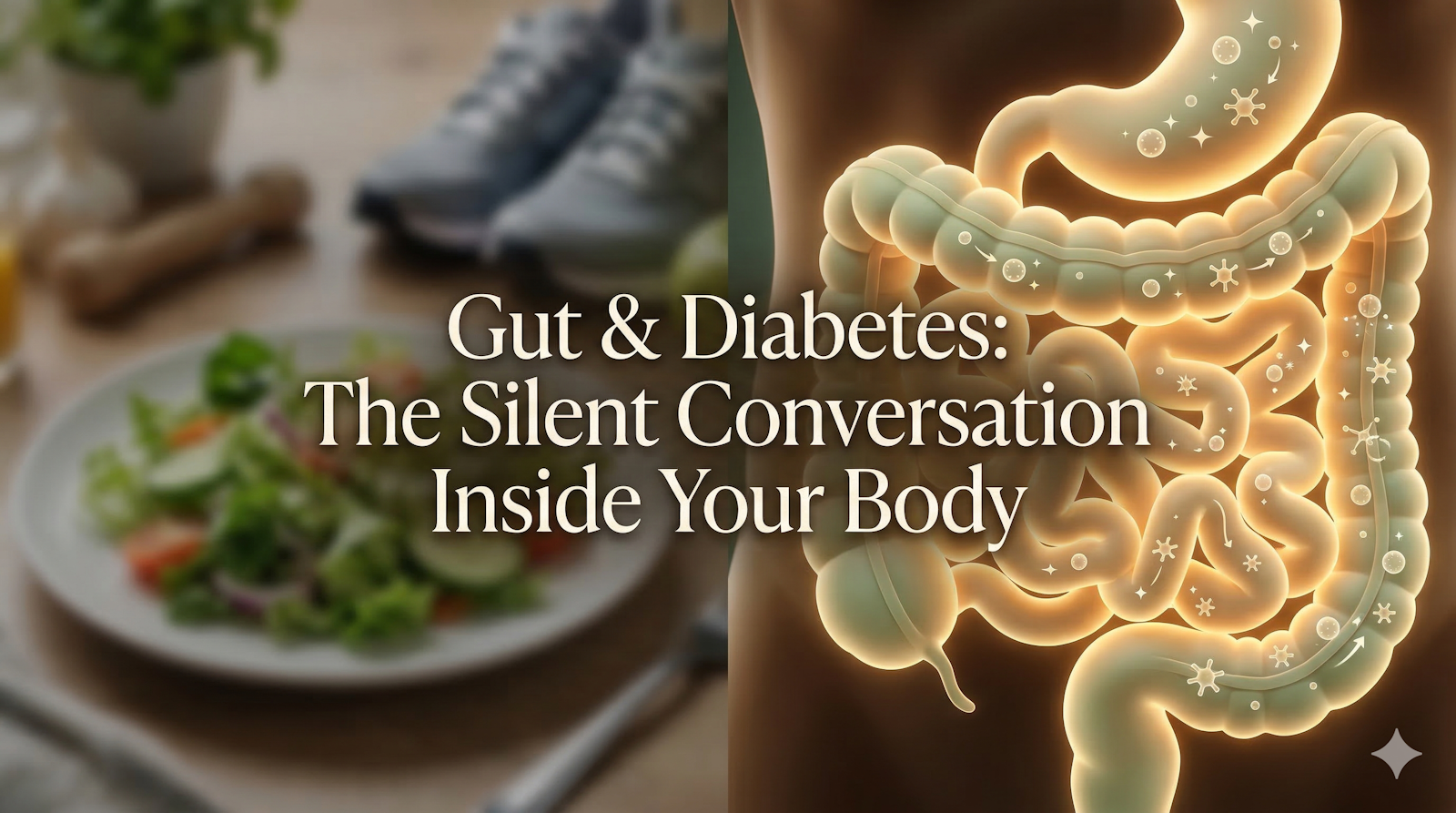
Gut Health and Diabetes: How to Heal Your Microbiome Naturally
It didn’t start with sugar. It started with tiredness.
Every afternoon, right around 3:30 PM, she would feel it—a sudden, heavy dip in energy. It wasn’t the kind of fatigue that a quick cup of tea could fix. This was deeper. It felt as though her body was quietly asking for help, but she didn’t quite understand the language yet.
Like many of us, she thought it was normal. She blamed work stress, age, and a lack of sleep. But then came the cravings. These weren’t passing thoughts; they felt like a physiological command. She needed something sweet, something quick, and she needed it now.
Slowly, without any dramatic warning signs, her body began to shift. She experienced more bloating, unpredictable mood swings, and a stubborn weight that simply wouldn’t budge. Eventually, it led to a diagnosis she never expected: Prediabetes.
The Missing Piece No One Talks About
When we think of diabetes or prediabetes, we usually think of one thing: Sugar. We picture too much sugar in the blood and too little insulin doing its job.
But what if long before your blood sugar rises, something else begins to break down? Something quieter. Something much deeper.

Your gut.
Your Gut: Not Just Digestion, But a Control Center
Inside your digestive system lives a vast, invisible world. Trillions of bacteria make up an ecosystem known as your gut microbiome. Most people assume this microbiome is only responsible for digesting food, but it is actually a master control center.
Your gut microbiome directly controls:
- How your body handles glucose.
- How sensitive your cells are to insulin.
- Your natural hunger signals.
- Your systemic inflammation levels.
- Your cravings (yes, even that sudden afternoon urge for something sweet).
The Day Everything Changed
When she finally sat down for guidance, she expected to be handed a strict, punishing diet plan. She braced herself for “no sugar, no carbs, and intense exercise.”
Instead, she heard something entirely unexpected: “We are not going to start with your sugar. We are going to start with your gut.” She was confused, but also deeply curious. Because deep down, she knew something had been physically off long before her blood reports ever changed.
The Gut–Blood Sugar Connection (Explained Simply)
Let’s break down exactly what happens inside your body in a way that makes sense.
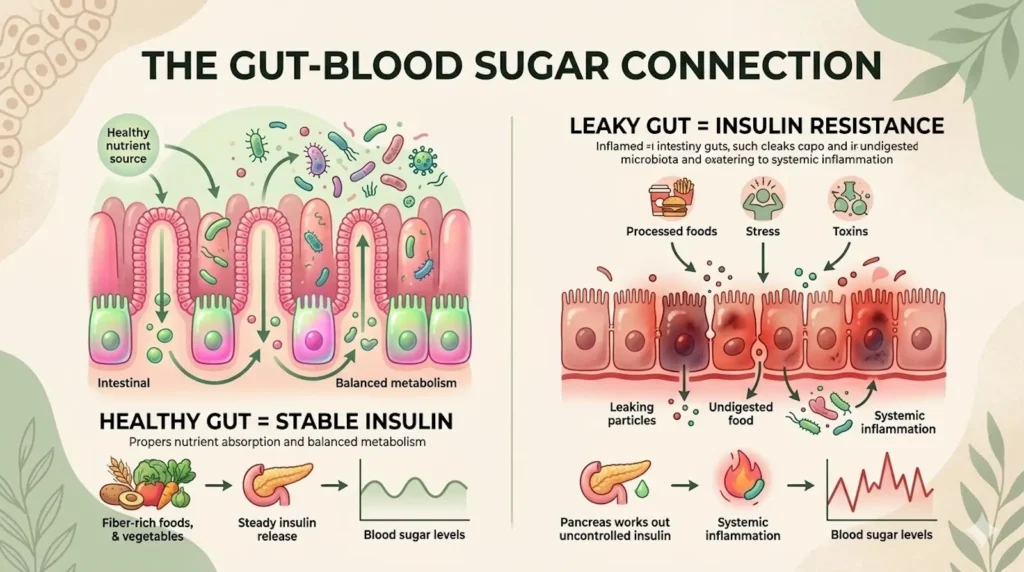
When your gut is healthy: Food is broken down properly, nutrients are absorbed efficiently, your blood sugar rises slowly and steadily, and insulin works smoothly to deliver energy to your cells.
When your gut is imbalanced (Dysbiosis): Harmful bacteria multiply, the gut lining becomes inflamed, and nutrient absorption drops. Because of this chaos, blood sugar spikes faster and insulin becomes significantly less effective.
Over time, this chronic imbalance leads directly to insulin resistance, increased fat storage, systemic inflammation, and eventually, metabolic disorders like diabetes.
The Real Root: Inflammation
Here is a biological truth most people miss: Diabetes is not purely a sugar problem; it is an inflammation problem. And a massive portion of that inflammation begins in your digestive tract.
When your gut lining becomes weak (a condition often called “leaky gut”), tiny, undigested particles from food and bacteria slip through the barrier and enter your bloodstream. Your immune system immediately flags them as foreign threats. Suddenly, your body is trapped in a constant state of low-grade inflammation. This systemic inflammation physically interferes with insulin, the very key required to control your blood sugar.
Why You Crave Sugar When Your Gut Is Imbalanced
This is the part that surprises people the most: Your cravings are not always “yours.”

Certain harmful gut bacteria actually feed and thrive on sugar. When they overpopulate, they can influence your gut-brain axis, sending signals to your brain that make you crave more of exactly what they need to survive. So, when you feel like you simply can’t control your sweet tooth, it might not be a lack of willpower. It might be a gut imbalance.
5 Gut Signals You Should Never Ignore
If you are trying to understand your body’s whispers before they become shouts, pay attention to these early signs of metabolic imbalance:
- Constant bloating after meals
- Intense sugar cravings (especially right after eating)
- Irregular bowel movements (chronic constipation or loose stools)
- Deep fatigue after eating
- Stubborn skin issues (like adult acne or pigmentation/melasma)
The Healing Approach (That Actually Works)
Forget the crash diets. Forget the “no-carb forever” mentality. If you want long-term, sustainable blood sugar control, your gut requires your attention first. Here is the framework that changes everything:
1. Feed the Good Bacteria (Prebiotics) Add foods that naturally nourish your microbiome, such as fiber-rich vegetables, whole grains (if tolerated), and seeds like flax and chia.
2. Bring in the Good Guys (Probiotics) Introduce natural beneficial bacteria to restore microbial balance. Include homemade curd, buttermilk, and traditional fermented foods in your daily routine.
3. Reduce Gut Irritants Temporarily reduce the intake of excess sugar, highly processed foods, refined seed oils, and artificial sweeteners. These directly feed harmful bacteria and stoke the fires of inflammation.
4. Support the Gut Lining Focus on healing the physical barrier of your gut with nutrients like zinc, L-glutamine, and Omega-3 fatty acids. A strong gut lining means less inflammation, which equals a much better insulin response.
5. Slow Down While Eating It sounds incredibly simple, but it is deeply powerful. When you eat in a state of stress, your digestion weakens and your blood sugar spikes much faster. Mindful, calm eating improves both your digestion and your glucose response.
The Emotional Shift
Healing isn’t just physical. For the woman in our story, the biggest transformation came from a mindset shift.
She moved from thinking, “I have to rigidly control my sugar,” to “I have to understand and support my body.” When you only focus on restriction, you create chronic psychological stress—and stress itself physically increases blood sugar levels.
The Result
After three months of consistent, gut-focused healing, there were no miracle pills and no extreme diets. Yet, her fasting blood sugar improved, her HbA1c reduced, her energy stabilized, and the sugar cravings almost entirely disappeared. Her weight began to drop naturally as a byproduct of her body finding balance.
Most importantly? She finally felt in control of her health again.
The Truth You Won’t Hear Everywhere
You cannot fix blood sugar issues solely by cutting out sugar. The real issue is not just what you eat, but how your internal ecosystem responds to what you eat. And that response is deeply, undeniably connected to your gut.
Your body is always communicating with you through your cravings, your fatigue, and your digestion. Most of us ignore that silent conversation until it becomes a medical diagnosis.
But what if you didn’t wait that long? What if you listened earlier? Because sometimes, the journey to true metabolic health doesn’t begin with fighting sugar. It begins with healing something much deeper.
Comments are closed