

When it comes to gut healing through Ayurveda, the core philosophy is simple: “Your gut is not just where food is digested—it is where health begins.”
This timeless wisdom is becoming increasingly relevant in today’s world, where digestive problems such as bloating, acidity, constipation, IBS, gas, food intolerances, and poor metabolism have become everyday concerns.
Modern science now recognizes that nearly 70% of the immune system resides in the gut, and the gut microbiome influences everything from digestion to hormones, mood, skin, immunity, and even brain function. Interestingly, Ayurveda explained this connection over 5,000 years ago through the concepts of Agni (digestive fire), Ama (toxins), and Doshas (Vata, Pitta, and Kapha).
Unlike modern medicine that often treats symptoms individually, Ayurveda looks at why digestion became disturbed in the first place.
If you’ve ever wondered:
- Why do some people suffer constipation while others struggle with acidity?
- Why does one person digest everything while another gets bloated after a healthy meal?
- Why do certain foods suit one person but not another?
The answer often lies in your Dosha.
In this comprehensive guide, you’ll learn how to recognize Vata, Pitta, and Kapha gut imbalances, identify the warning signs early, adopt an Ayurvedic morning routine for healing, discover anti-inflammatory drinks, and understand why Triphala has earned the title of Ayurveda’s most celebrated gut tonic.
gut healing through AyurvedaUnderstanding Gut Health in Ayurveda
According to Ayurveda, digestion depends upon Agni, the digestive fire.
A healthy Agni means:
- Strong digestion
- Better nutrient absorption
- Healthy bowel movements
- Good immunity
- Balanced hormones
- Clear skin
- Stable mood
- High energy
When Agni weakens, food is not completely digested. This partially digested material becomes Ama, a sticky toxic substance that blocks body channels and initiates disease.
Different dosha imbalances disturb Agni differently.
Vata Gut Issues
What is Vata?
Vata is made of Air + Space elements.
It controls:
- Movement
- Nervous system
- Bowel movement
- Peristalsis
- Gas movement
- Elimination
When Vata increases, digestion becomes irregular and unpredictable.
Common Symptoms of Vata Gut Imbalance
- Constipation & dry stools
- Gas & bloating
- Burping & stomach noises
- Variable appetite
- Cramping pain
- IBS with constipation
- Anxiety-related digestive issues
- Feeling full quickly
- Dry mouth
People often say, “Some days I digest everything. Other days even water causes bloating.” That is classic Vata.
Causes of Vata Gut Problems
- Skipping meals
- Eating while traveling
- Excess fasting
- Cold foods, dry snacks, and raw salads
- Excess tea or coffee
- Irregular meal timing
- Chronic stress, overthinking, and lack of sleep
Foods That Worsen Vata
Popcorn, dry fruits in excess, chips, cold smoothies, ice cream, carbonated drinks, raw vegetables, and crackers.

Foods That Balance Vata
Choose warm, moist, cooked foods such as:
- Khichdi & Moong dal
- Ghee
- Warm soups & steamed vegetables
- Rice, sweet potato, pumpkin, and oats
- Herbal teas
Lifestyle Tips for Vata
- Eat meals at fixed times.
- Sleep before 10 PM.
- Drink warm water.
- Practice Abhyanga (oil massage).
- Avoid excessive fasting.
Pitta Gut Issues
What is Pitta?
Pitta consists of Fire + Water elements.
It governs:
- Digestion & metabolism
- Enzyme production
- Liver function
- Body temperature
Strong Pitta gives excellent digestion, but excess Pitta creates inflammation.
Common Symptoms of Pitta Gut Imbalance
- Acidity, heartburn, and acid reflux
- Burning sensation & gastritis
- Loose motions
- Mouth ulcers
- Sour belching
- Excess hunger (irritability if meals are delayed)
- Bitter taste & excess thirst
Causes of Pitta Gut Problems
- Spicy and fried foods
- Alcohol, smoking, and excess caffeine
- Anger & perfectionism
- Working under pressure
- Skipping meals
Foods That Increase Pitta
Red chilli, garlic (in excess), vinegar, tomatoes, pickles, alcohol, and deep-fried foods.
Foods That Calm Pitta
Coconut water, bottle gourd, cucumber, coriander, fennel, mint, ghee, rice, sweet fruits, and aloe vera (only if suitable).
Lifestyle Tips for Pitta
- Avoid working late nights.
- Stay hydrated.
- Practice cooling breathing techniques.
- Walk after meals.
- Manage stress before it becomes anger.
Kapha Gut Issues
What is Kapha?
Kapha is composed of Earth + Water elements.
It provides:
- Stability
- Lubrication
- Strength
- Immunity
Too much Kapha slows digestion down.

Common Symptoms of Kapha Gut Imbalance
- Heavy feeling after eating
- Slow digestion & slow metabolism
- Weight gain & water retention
- Excess mucus & frequent colds
- Nausea
- Sleepiness after meals
- Low appetite
- White coating on tongue
Causes of Kapha Gut Problems
- Overeating & emotional eating
- Eating sweets regularly
- Lack of exercise
- Sleeping during the day
- Heavy dairy intake
- Cold beverages
Foods That Increase Kapha
Cheese, yogurt at night, ice cream, fried snacks, refined flour, sugary desserts, and excess bananas.
Foods That Balance Kapha
Ginger, black pepper, turmeric, millets, lentils, green leafy vegetables, warm soups, and herbal teas.
Lifestyle Tips for Kapha
- Wake before sunrise.
- Exercise daily.
- Avoid daytime naps.
- Eat lighter dinners.
- Stay physically active after meals.
How to Identify Your Dosha Imbalance in Digestion
Your digestive symptoms can provide valuable clues about which dosha is out of balance. Here’s a simple guide:
| Digestive Symptom | Likely Dosha |
| Gas, bloating, constipation | Vata |
| Burning, acidity, ulcers | Pitta |
| Heavy stomach, sluggish digestion | Kapha |
| Variable appetite | Vata |
| Very strong appetite | Pitta |
| Low appetite | Kapha |
| Dry stools | Vata |
| Loose stools | Pitta |
| Sticky stools | Kapha |
| Anxiety with digestion | Vata |
| Anger with digestion | Pitta |
| Laziness after meals | Kapha |
Remember, many people have a combination imbalance, such as Vata-Pitta or Kapha-Vata. A qualified Ayurvedic practitioner can help determine your individual constitution (Prakriti) and current imbalance (Vikriti).
Ayurvedic Morning Routine for Gut Healing
Your first hour after waking can set the tone for your digestive health throughout the day. Ayurveda refers to this as Dinacharya, or the daily routine.
- Wake Early: Aim to wake between 5:30–6:30 AM, during the Vata period of the morning, when bowel movements are naturally encouraged.
- Drink Warm Water: Sip 1–2 glasses of warm water to gently stimulate digestion and support elimination.
- Clean the Tongue: A white or thick coating on the tongue may indicate Ama. Use a tongue scraper to remove overnight buildup and improve taste perception.
- Oil Pulling: Swish sesame or coconut oil in your mouth for 5–10 minutes. This supports oral hygiene, which is closely linked to gut health.
- Eliminate Naturally: Never suppress the urge to pass stool. Establishing a regular bowel routine is a cornerstone of digestive wellness.
- Gentle Movement: Practice yoga poses such as Cat-Cow, Child’s Pose, Wind-Relieving Pose (Pawan mukt asana), and Spinal twists. These movements encourage healthy digestion and reduce bloating.
- Deep Breathing or Meditation: Stress directly affects the gut through the gut-brain axis. Five to ten minutes of mindful breathing can calm the nervous system and improve digestive function.
- Eat a Warm Breakfast: Choose nourishing options such as vegetable poha, oatmeal, moong dal chilla, or lightly spiced porridge rather than cold cereals or sugary pastries.
Anti-Inflammatory Drinks for Gut Health
The right beverages can soothe inflammation, improve digestion, and support the gut lining.
- Ginger Tea: Helps relieve nausea, gas, bloating, and sluggish digestion. Especially beneficial for Kapha and Vata.
- Fennel Seed Water: Known to reduce bloating, improve digestion, and cool excess Pitta.
- Cumin-Coriander-Fennel (CCF) Tea: A classic Ayurvedic blend that gently supports digestion without being harsh.
- How to make it: Boil 1 tsp cumin, 1 tsp coriander, and 1 tsp fennel in 3 cups of water for 10 minutes. Strain and sip warm throughout the day.
- Turmeric Golden Milk: Turmeric contains curcumin, a well-known anti-inflammatory compound. Prepare with warm milk (or plant-based milk) and a pinch of black pepper to enhance absorption.
- Mint and Coriander Drink: Refreshing for Pitta-related acidity and heat.
- Jeera (Cumin) Water: Supports digestion, reduces bloating, and may help improve metabolic function.
- Ajwain Water: Useful for occasional indigestion and gas. Consume in moderation, especially if you have significant acidity.
Tip: Avoid drinking large amounts of water immediately before or during meals, as Ayurveda suggests it may dilute digestive fire. Instead, sip small amounts of warm water if needed.
Triphala: Ayurveda’s Timeless Gut Tonic
Among all Ayurvedic herbs, Triphala is one of the most respected for digestive health. The name literally means “three fruits.”
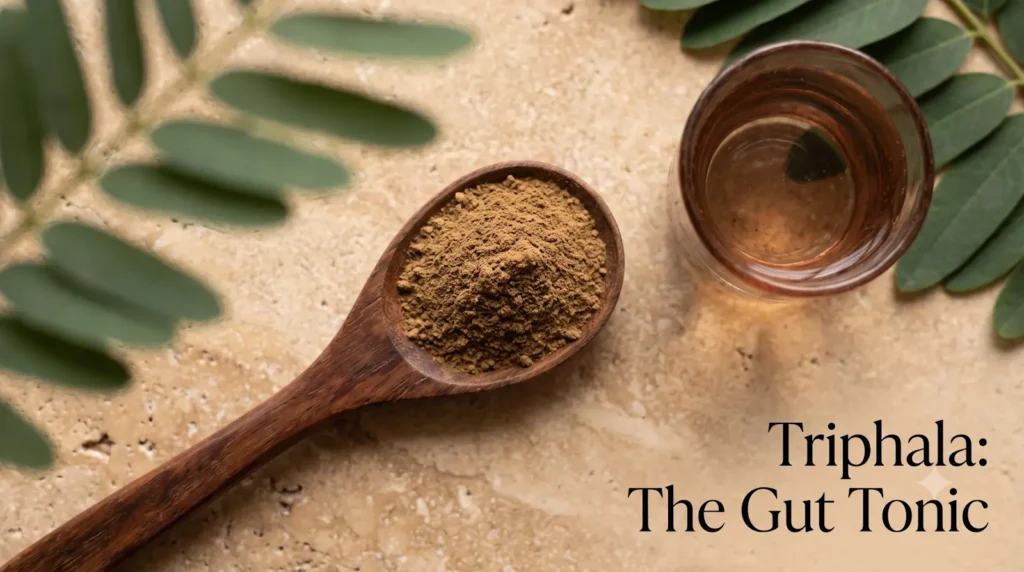
It combines:
- Amalaki (Indian Gooseberry) – Rich in antioxidants and supports Pitta balance.
- Bibhitaki – Helps reduce excess Kapha and supports respiratory and digestive health.
- Haritaki – Traditionally used to promote healthy bowel movements and support Vata balance.
Together, these three fruits create a synergistic formula that supports overall digestive function.
Benefits of Triphala
- Promotes Regular Bowel Movements: Triphala gently supports natural elimination without acting as a harsh stimulant, making it a popular choice for occasional constipation.
- Supports Healthy Digestion: It may help improve digestive efficiency and reduce bloating in some individuals.
- Rich in Antioxidants: The fruits contain polyphenols and vitamin C (particularly Amalaki), which help combat oxidative stress.
- Supports the Gut Microbiome: Emerging research suggests Triphala may encourage the growth of beneficial gut bacteria.
- Helps Reduce Ama: In Ayurvedic practice, Triphala is traditionally used to support the body’s natural cleansing processes.
- Supports Liver Function: By promoting healthy digestion and elimination, it indirectly supports liver health.
- May Help Manage Inflammation: Its antioxidant compounds may contribute to reducing low-grade inflammation.
How to Take Triphala
Triphala is available as a powder (Churna), tablets, or capsules. It is traditionally taken at bedtime with warm water, but the appropriate dose and timing vary depending on the individual.
Important: Triphala is not suitable for everyone. Pregnant or breastfeeding women, young children, and people with certain medical conditions or those taking medications should consult a qualified healthcare professional before using it. It may also cause loose stools if taken in excessive amounts.
Final Thoughts
Digestive health is far more than the absence of stomach pain. It influences your immunity, energy, mental clarity, skin, hormones, and overall well-being.
Ayurveda reminds us that healing begins by understanding our unique constitution. Rather than following one diet for everyone, it encourages us to recognize whether Vata, Pitta, or Kapha is driving our digestive symptoms and to make gentle, sustainable lifestyle changes.
Small daily habits—eating at regular times, choosing foods that suit your dosha, following a nourishing morning routine, managing stress, and incorporating traditional remedies like CCF tea or Triphala when appropriate—can gradually restore digestive balance.
Remember, true gut healing is not about quick fixes. It is about rebuilding digestive strength, supporting your body’s natural intelligence, and creating habits that promote health for years to come.
When your gut is balanced, your entire body benefits—and Ayurveda has been teaching this wisdom for thousands of years.
Comments are closed