
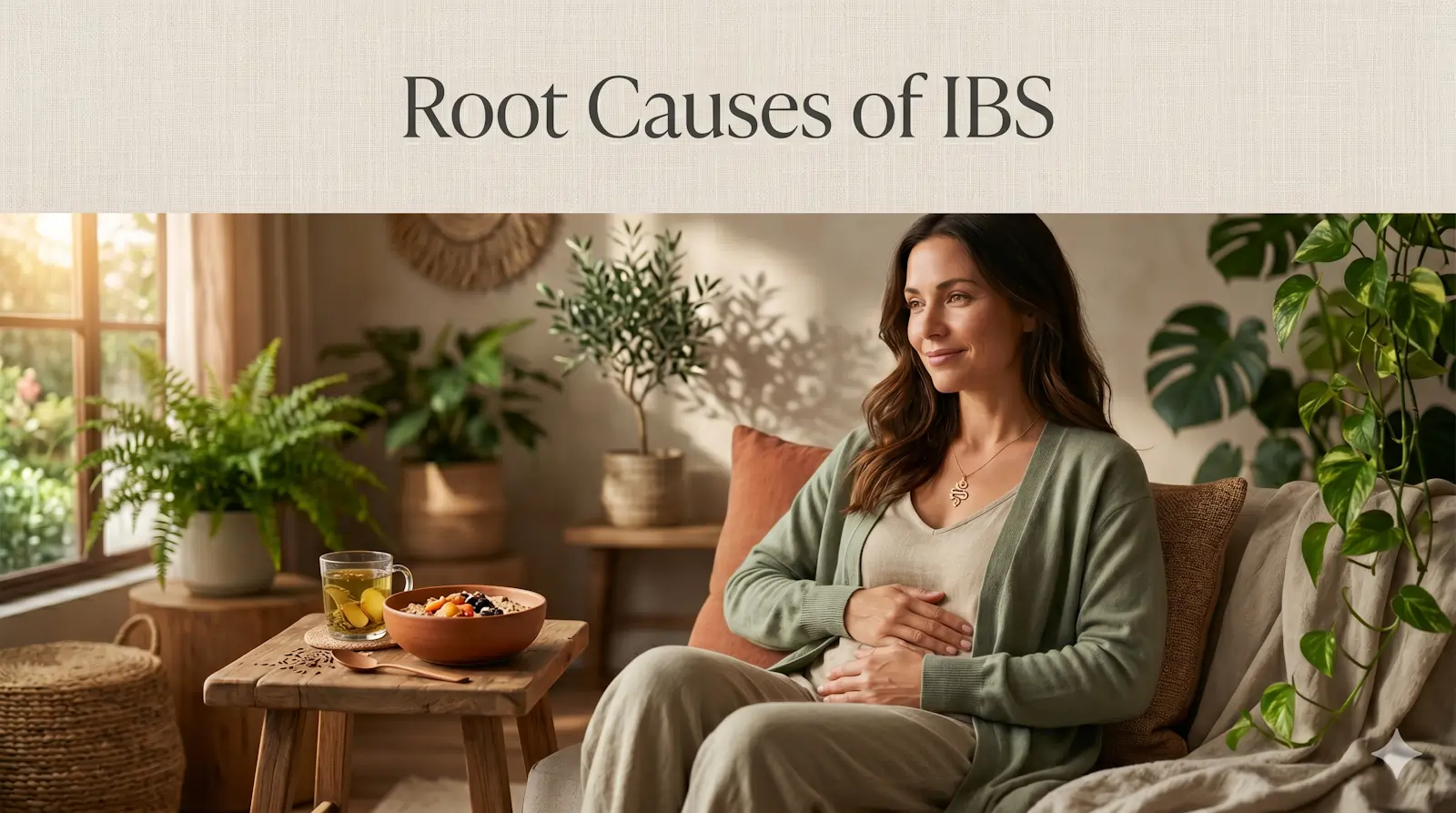
To understand the true root causes of IBS, imagine waking up in the morning, getting ready for work, but your stomach already feels incredibly uncomfortable. Sometimes you feel heavy and bloated, sometimes you urgently rush to the toilet, and sometimes you sit there but absolutely nothing happens. You visit doctors, and they say your reports are completely normal, but deep down, you still don’t feel normalbut deep down, you still don’t feel normal.
This is the daily, frustrating reality for many people living with IBS—irritable bowel syndrome.
IBS is one of the most common gut health problems in the world today, yet it remains one of the most profoundly misunderstood conditions. Many people suffer silently for years because their medical tests come back normal, and they are simply told, “It’s just stress”. But IBS is very real, and understanding it properly is the first step that can completely change someone’s life.
Let’s look past the symptoms and uncover the hidden root causes of IBS, so you can finally take back control of your digestion.
What Exactly is IBS?
IBS is classified as a functional digestive disorder. This means that physically, the digestive system looks entirely normal in medical tests and scans, but it simply does not function normally.
When you have IBS, several things happen inside the body:
- The gut becomes highly sensitive.
- The intestines move either too fast or too slow.
- Gas forms easily and frequently.
- Your overall digestion becomes highly irregular.
- Stress directly and immediately affects the stomach.
It is important to know that IBS is not an infection, it is not a life-threatening disease like cancer, and it is not dangerous in that way. But it can seriously and deeply affect your daily quality of life.
The Most Common Symptoms of IBS
Different people experience IBS differently, but the most common and persistent symptoms include:
- Severe bloating immediately after meals.
- Frequent gas formation.
- Sharp abdominal pain or cramps.
- Chronic constipation or frequent loose motions.
- Alternating between constipation and diarrhea.
- A frustrating feeling of an incomplete bowel movement.
- The presence of mucus in the stool.
- Stomach discomfort that flares up immediately after stress.
- Sudden food intolerance, acidity, and sometimes nausea.
- Deep fatigue and brain fog.
One very important sign of IBS to look out for: The abdominal pain usually reduces after passing a stool or gas.
The 3 Main Types of IBS
IBS is not a one-size-fits-all condition; it is mainly divided into three distinct types:
1. IBS-C (Constipation Type) This type is characterized by hard stools, difficulty passing stool, constant bloating, gas, and always feeling heavy.

2. IBS-D (Diarrhea Type) This involves frequent loose motions, a sudden and uncontrollable urgency to go to the toilet, painful stomach cramps, and feeling overwhelming weakness.
3. IBS-M (Mixed Type) Most people actually fall into this category. It involves dealing with constipation sometimes, loose motions at other times, and experiencing gas and bloating almost always.
The Hidden Root Causes of IBS
IBS does not have one single cause; it usually happens due to a combination of multiple imbalances in the body.
1. A Gut-Brain Connection Problem Your gut and your brain are directly connected through a complex network of nerves. When you are stressed, anxious, or worried, your gut movement physically changes. That is exactly why many people get loose motions right before exams, experience stomach pain during times of stress, or face constipation during travel. IBS is strongly and undeniably linked with stress and emotions.
2. Weak Digestion If your stomach acid, digestive enzymes, and bile are not working properly, your food simply does not digest properly. When food sits undigested, gas forms, painful bloating happens, and your stool becomes irregular.

3. Gut Microbiome Imbalance Our intestine is home to both good bacteria and bad bacteria. If the bad bacteria increase and take over, gas increases, bloating increases, overall digestion becomes weak, and food intolerance develops. This specific condition is sometimes closely linked with SIBO (Small Intestinal Bacterial Overgrowth).
4. Food Intolerances Many IBS patients notice their symptoms flare up after eating specific foods. Common triggers include milk (lactose intolerance), gluten, fried food, processed food, sugar, artificial sweeteners, excess tea or coffee, spicy food, and carbonated drinks.
5. Antibiotics and Medicines the frequent use of certain medications like antibiotics, painkillers, and antacids can severely damage your delicate gut bacteria and ultimately lead to IBS.
6. A Poor Lifestyle IBS is incredibly common in people who maintain poor daily habits. This includes sleeping late, eating fast, consuming processed food, sitting all day, drinking less water, taking on too much stress, skipping meals, or eating while distracted by a mobile phone or laptop.
IBS vs IBD: They Are Not the Same
Many people mistakenly confuse IBS with IBD, but they are very different.
IBS (irritable bowel syndrome) is a functional problem where tests appear normal, there is no physical inflammation, and it is heavily stress and lifestyle-related. It is uncomfortable, but not dangerous like IBD.
IBD (Inflammatory Bowel Disease) includes serious conditions like Crohn’s disease or Ulcerative colitis. In IBD, visible inflammation is present, there may be blood in the stool, unexplained weight loss occurs, and it requires serious medical attention.
How is IBS Diagnosed?
There is no single, definitive test for IBS. Doctors usually diagnose IBS when your medical reports are normal, your symptoms are long-term, and absolutely no infection or inflammation is found.
To rule out other issues, doctors may recommend a CBC, Thyroid panel, Vitamin B12, Vitamin D, a Stool test, a Celiac test, and sometimes a Colonoscopy. Ultimately, IBS is diagnosed by looking at your symptoms combined with ruling out other diseases.
Identifying Your Triggers and Healing Foods
Different people have different triggers, but you should identify your personal trigger foods. Common IBS trigger foods to watch out for include milk, cheese, paneer, fried food, maida, bakery products, sugar, chocolates, artificial sweeteners, excess tea or coffee, and cold drinks. For some, onions, garlic, and gas-forming foods like beans, cabbage, and cauliflower are also problematic.
On the other hand, simple, home-cooked food works best for healing IBS. Foods that usually help soothe symptoms include:
- Rice and Moong dal.
- Gentle vegetables like Lauki, Tori, Pumpkin, Carrot, and Spinach.
- Fruits like Banana and Papaya.
- Hydrating Coconut water, Jeera water, and Saunf water.
- Probiotics like Homemade curd (if tolerated) and Buttermilk.
- Digestive aids like Ginger and Ajwain.
- Isabgol husk (specifically for constipation-type IBS).
Lifestyle Tips to Manage and Reverse IBS
IBS management is 70% lifestyle and 30% food.
Very Important Daily Habits: You must eat at the same time daily, eat slowly, and chew your food properly. Do not drink too much water during meals, but drink enough water throughout the rest of the day. Reduce mobile phone use while eating, take a walk after meals, and ensure you sleep before 11 PM. Practice deep breathing, manage your stress, and commit to exercising or doing yoga daily.
The Best Exercises for IBS: IBS improves a lot when stress reduces and movement increases. The best exercises include Walking, Yoga, Deep breathing, Anulom Vilom, Vajrasana after meals, Pawanmuktasana, Child’s pose, and Meditation.
The Important Truth About IBS
This is very important to understand: IBS is not just a stomach problem. IBS is a complex gut, brain, and lifestyle problem.

You cannot cure IBS with only medicines, you cannot cure it with only diet, and you cannot cure it with only stress management. You need a holistic approach that includes diet, lifestyle, stress control, and gut repair.
The good news is that IBS can be managed and improved a lot if the root causes are truly addressed. You must focus on improving digestion, healing the gut lining, balancing your gut bacteria, managing stress, sleeping properly, eating simple food, maintaining a regular bowel routine, and reducing sugar and processed food. Many people live completely normal lives after managing their IBS properly.
Final Message
If you have IBS, remember this: Your stomach is not your enemy. Your gut is simply trying to talk to you. It is desperately telling you to slow down, eat better, sleep better, stress less, move more, and live a more balanced life.
IBS is not just a disorder. For many people, IBS actually becomes a powerful turning point towards a much healthier lifestyle. When you finally take care of your gut, your digestion improves, your energy improves, your mood improves, your skin improves, and your overall life improves.
Healthy gut = Healthy life.
Comments are closed