

Bloating is one of the most common—and frustrating—complaints among women today.
We hear it all the time: “My stomach becomes huge after eating.” “By the evening, I look pregnant.” “I eat so little, but I still feel incredibly heavy.” Most people assume bloating happens simply because of excess gas or overeating. But the truth is, chronic bloating is rarely just a food problem. It is a biological signal. When you experience a tight, uncomfortable stomach day after day, your body is actively trying to tell you: “Something is not working properly inside.”
Let’s look past the surface and uncover the 10 hidden causes of bloating in women, and more importantly, how you can begin to heal.
What Bloating Really Is (And What It Isn’t)
First, let’s clear up a massive misconception: Bloating is not always fat, and it is not always gas.
Bloating can be caused by water retention, severe constipation, sluggish digestion, silent food intolerances, hormonal fluctuations, chronic stress, or an overloaded liver. This is exactly why so many women exercise daily and eat perfectly “healthy” diets, yet still struggle with a heavy, distended stomach. The root cause is hidden.
1. Eating Too Fast (The Ignored Habit)
This is incredibly common and highly ignored. Digestion begins in your mouth, not your stomach.
When you eat in a rush, eat while standing, or scroll through your phone during meals, you swallow excess air. More importantly, your food is not chewed properly, meaning your digestive enzymes cannot mix with it. This half-digested food travels to your intestines where it ferments, creates gas, and triggers immediate bloating.
- The Fix: Chew each bite 20 to 25 times. By simply slowing down, many women see their bloating reduce by half.
2. Silent Constipation
Constipation is one of the leading causes of bloating in women. Many women think, “I go to the bathroom daily, so I am not constipated.” But constipation also includes passing hard stool, feeling a sense of incomplete clearance, or needing to strain.
If your bowel is not completely cleared, waste lingers in the intestines. It ferments, produces gas, and allows toxins to be reabsorbed into your bloodstream. Until your bowel movements are effortless, complete, and daily, the heavy stomach will not go away.
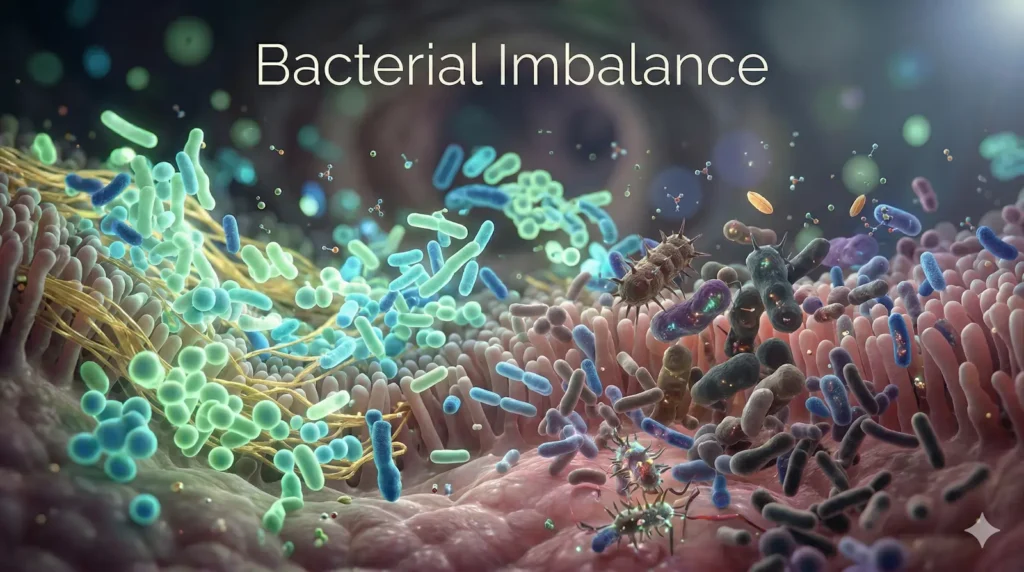
3. A Disturbed Gut Microbiome (Dysbiosis)
Your gut contains trillions of bacteria. The “good” bacteria aid in digestion, vitamin production, and hormone balance. However, when your lifestyle includes too much sugar, processed food, antibiotics, or stress, the “bad” bacteria take over.
These harmful bacteria produce excessive amounts of gas as they feed, leading to chronic bloating, IBS symptoms, and intense sugar cravings.
4. Unrecognized Food Intolerances
Many women are highly sensitive to certain everyday foods without even realizing it. Common culprits include dairy (milk, paneer, cheese), gluten and wheat, corn, soy, or heavy legumes like rajma and chole.
If your stomach blows up shortly after eating a specific meal, a silent food intolerance might be to blame. You don’t always need expensive allergy tests; a simple 2-to-3-week elimination phase can reveal exactly what your body is rejecting.
5. Hormonal Fluctuations
A woman’s bloating is very often hormonal, not just digestive.
If you notice severe bloating right before your periods, during ovulation, or alongside conditions like PCOS, thyroid imbalances, or perimenopause, hormones are at play. Before your period, fluctuating estrogen and progesterone cause your digestion to slow down and your body to drastically increase water retention.
6. Chronic Stress and Overthinking
Your gut and brain are intimately connected through the gut-brain axis. Have you ever noticed your stomach getting tight during a stressful moment, or losing your appetite when you are upset?
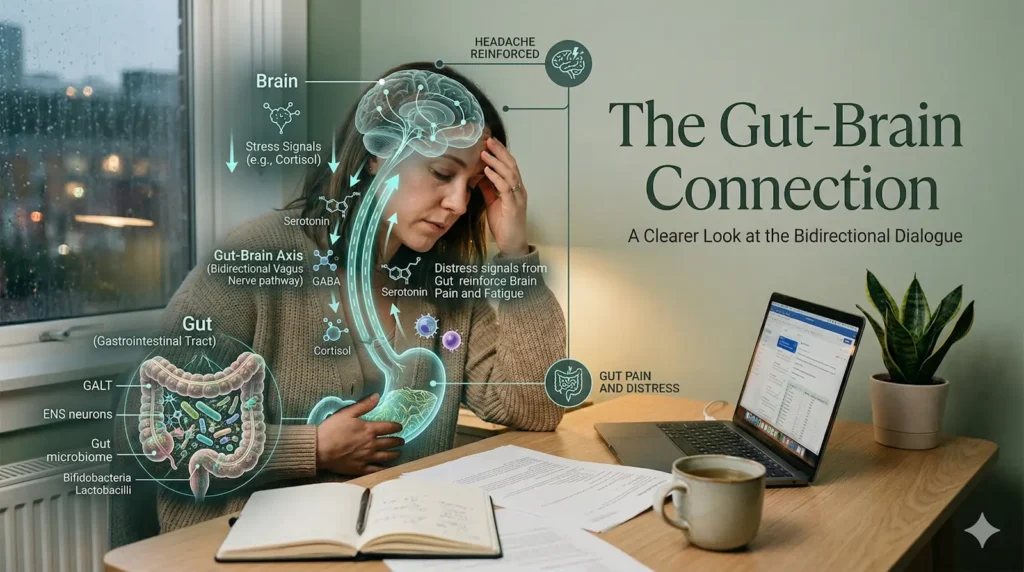
When you are stressed, your body enters “fight or flight” mode. Stomach acid drops, digestive enzymes reduce, and digestion grinds to a halt. The food sits in your stomach longer, ferments, and causes profound bloating. A chronically stressed mind will almost always create a bloated stomach.
7. Dehydration (The Water Retention Paradox)
It sounds deeply ironic, but when you do not drink enough water, your body panics and holds onto the water it has, causing severe bloating and puffiness.
Water is essential to keep your dietary fiber moving smoothly through your digestive tract and to flush out daily toxins. If you are dehydrated, constipation and gas are inevitable.
8. Excess Caffeine and Empty-Stomach Tea
Starting the day with a strong cup of chai or coffee on an empty stomach is a cultural staple, but it is disastrous for bloating.
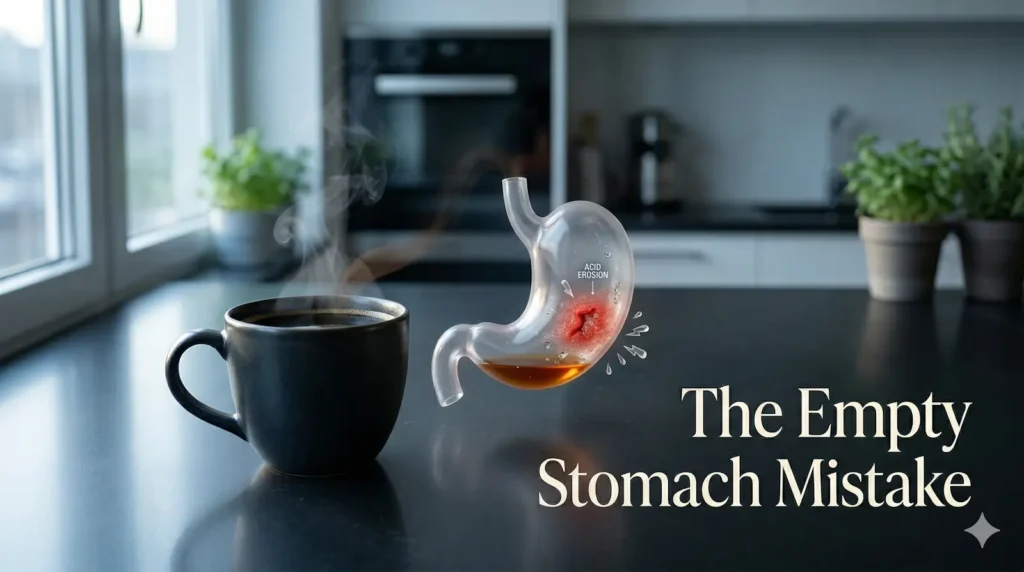
Excessive caffeine—especially on an empty stomach—increases acidity, severely irritates the delicate gut lining, causes cellular dehydration, and spikes your stress hormone (cortisol). This perfectly sets the stage for a day of painful bloating and indigestion.
9. Late-Night Dinners
Your digestive system runs on a circadian rhythm and naturally slows down in the evening. If you eat dinner at 10:00 PM or 10:30 PM and go to sleep shortly after, your food simply does not digest properly. It sits in your stomach, ferments overnight, and guarantees you will wake up with morning bloating.
- The Fix: Aim to finish your dinner between 7:30 PM and 8:30 PM.
10. A Sedentary Lifestyle
Physical movement is non-negotiable for digestion. If you sit at a desk all day with no walking, no stretching, and no exercise, your digestion stagnates. Gas accumulates, the bowels slow down, and bloating increases. Even just a gentle 15-minute walk after your meals can drastically improve your gut motility.
The Holistic Her Morning Routine for Less Bloating

If you want to start healing your bloating tomorrow morning, try this gentle, gut-friendly routine:
- Start with a glass of warm water.
- Eat 5 soaked raisins and one portion of fresh fruit.
- Take a calm 5-to-10-minute walk.
- Train your body to use the restroom at the same time every morning.
Final Thought: Listen to the Message
Bloating is not just “a little gas.” It is a loud and clear message from your body asking you to fix your digestion, manage your stress, balance your hormones, and correct your daily habits.
Most women try to fix the problem with temporary band-aids: anti-gas tablets, hot water, or ajwain. While these offer quick relief, the real solution requires looking deeper.
Bloating is not the core problem; it is merely the symptom. When you finally commit to healing your gut, balancing your lifestyle, and managing your stress, the bloating will naturally and beautifully fade away.
Comments are closed