

Struggling with stubborn hormonal acne or melasma? Discover the clinical gut-skin connection and learn why healing your microbiome is the secret to clear skin.
Emma was 35, a corporate attorney in New York City.
Her calendar was meticulously color-coded. Her wardrobe was impeccably tailored. And her skincare routine? Flawless. Vitamin C in the morning, retinoids at night, monthly chemical peels, and SPF 50 applied religiously, even in the dead of winter.
Yet, every morning, the mirror told a entirely different story.
She faced painful, deep-seated hormonal acne along her jawline and dark, stubborn brown patches spreading across her cheeks. Her makeup no longer blended; it merely concealed.
What frustrated Emma the most wasn’t just the breakouts or the pigmentation. It was the exhausting reality that she was doing everything right, but her skin was still completely out of control.
She blamed stress. She blamed her genetics. She blamed her age. But she never blamed the actual culprit, because no one had ever told her to look there.
Until we looked at her gut.
The Gut-Skin Connection: Why Your Digestion Controls Your Glow
Modern dermatology is finally catching up to what functional medicine has observed for decades: your skin is a direct reflection of your internal health.
This biological highway is clinically known as the Gut-Skin Axis.
Your gut microbiome—the trillions of bacteria, fungi, and microbes living in your digestive tract—acts as a master control center for your entire body. It regulates:
- Systemic inflammation
- Immune system responses
- Hormone metabolism and clearance
- Nutrient absorption
- Detoxification pathways
When your gut is balanced, your skin is calm, resilient, and glowing. When your gut is inflamed, permeable, or imbalanced, your skin becomes a reactive battlefield. For women over 30, this connection becomes increasingly critical as shifting hormones, cumulative stress, and lifestyle factors take their toll.
Emma’s skin issues weren’t random. When we reviewed her health history, a clear pattern emerged: daily bloating after meals, unpredictable digestion, 4 PM sugar cravings, and high stress from corporate deadlines. Her dermatologist saw acne. Her esthetician saw melasma.
I saw systemic inflammation and hormone dysregulation. Her body wasn’t attacking her skin; it was desperately signaling for help.
How Poor Gut Health Triggers Hormonal Acne
Let’s break down the clinical reality of why adult acne happens when the gut is compromised.

1. Dysbiosis: The Microbiome Imbalance
Emma’s gut showed classic signs of dysbiosis—an overgrowth of opportunistic, harmful bacteria and a severe lack of beneficial, protective strains.
Dysbiosis triggers a cascade of issues. It increases inflammatory cytokines, spikes oxidative stress, and drives insulin resistance. When insulin spikes, it increases androgen (male hormone) activity in the body. Androgens directly stimulate your sebaceous glands to produce excess oil. The result? Deep, cystic jawline acne that no topical salicylic acid can permanently resolve.
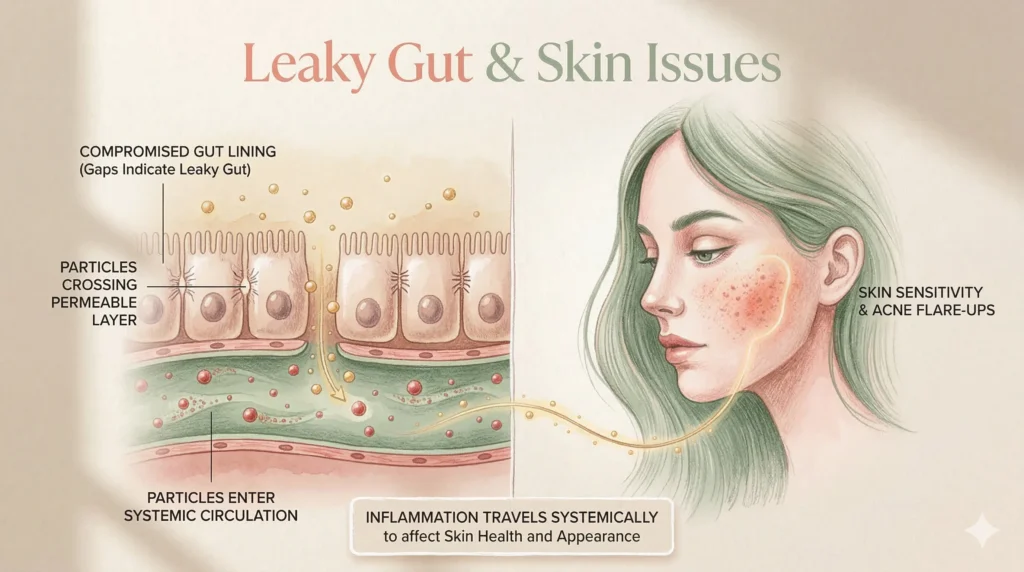
2. Increased Intestinal Permeability (“Leaky Gut”)
Chronic stress, ultra-processed foods, alcohol, and frequent antibiotic use can physically weaken the lining of your intestinal barrier.
When this barrier becomes compromised, partially digested food particles and microbial toxins (like lipopolysaccharides) “leak” into the bloodstream. Your immune system immediately identifies these as foreign invaders and mounts an attack. Because the skin is your body’s largest detoxification organ, this internal immune war frequently manifests on the surface as painful breakouts, severe redness, and inflammatory acne.
3. Estrogen Recycling and Hormonal Chaos
Your gut plays an absolutely critical role in metabolizing and clearing hormones, specifically estrogen.
Within your microbiome is a specific group of bacteria called the estrobolome. When these bacteria are balanced, excess estrogen is safely packaged up and eliminated through your bowels. When they are imbalanced, estrogen is not properly eliminated. Instead, it is unpacked and reabsorbed back into your bloodstream. This creates a state of estrogen dominance, driving period-related acne, persistent jawline breakouts, and intense mood swings.
The Overlooked Link Between Your Gut and Melasma
While Emma was frustrated by her acne, she was emotionally exhausted by her melasma.
Clinically, melasma is characterized by hyperpigmentation—brown or grey-brown patches on the face. While standard advice blames sun exposure, pregnancy, or birth control pills, emerging research proves that internal inflammation and gut-driven hormone dysregulation heavily influence these pigmentation pathways.
Chronic Inflammation Activates Melanocytes
Melanocytes are the cells in your skin responsible for producing pigment (melanin). When chronic inflammatory signals are circulating in your bloodstream due to a distressed gut, your body stays in a constant “alert mode.”
This systemic inflammation overstimulates the melanocytes. They begin overproducing pigment, leading to dark patches on the cheeks, forehead, and upper lip that are incredibly resistant to topical brightening serums. If the gut inflammation persists, the pigmentation will almost always return, even after expensive laser treatments.
Liver-Gut Detox Pathway Overload
Your gut and your liver work as a synchronized detoxification team. If your digestion is sluggish and you are constipated, toxins accumulate. This places a massive burden on your liver, slowing down its ability to clear both toxins and excess hormones. This backup increases oxidative stress in the body—one of the primary internal triggers for pigment overproduction.
Emma’s melasma wasn’t just a reaction to UV rays; it was an inflammatory, internal distress signal.
Why This is an Epidemic in Tier 1 Countries
Women in fast-paced environments across the US, UK, Canada, and Australia are facing a unique set of modern challenges:
- Normalized, chronic psychological stress.
- Diets heavy in ultra-processed, convenience foods.
- High daily caffeine intake masking exhaustion.
- Widespread sleep deprivation.
- Frequent, repeated exposure to antibiotics.
Every single one of these factors actively destroys microbiome diversity. As gut diversity plummets, inflammatory skin conditions skyrocket. This is exactly why so many women over 30 are desperately searching for answers to why their hormonal acne won’t fade and their melasma keeps returning.
The Turning Point: How to Actually Heal
When it came to treating Emma, we didn’t add a single new skincare product to her routine. Instead, we removed her internal triggers.
Here is the foundational protocol for healing the gut-skin axis:
- Feed the Good Bacteria: We drastically increased her intake of diverse, plant-based fibers to feed the beneficial bacteria in her microbiome.
- Remove Inflammatory Triggers: We temporarily eliminated highly processed foods and refined sugars that were feeding the dysbiosis.
- Stabilize Blood Sugar: By focusing on protein, healthy fats, and complex carbohydrates at every meal, we stopped the insulin spikes that were driving her oil production.
- Support Liver Detoxification: We introduced bitter greens, cruciferous vegetables, and adequate hydration to help her liver effectively clear out recycled estrogen.
- Regulate the Nervous System: We implemented strict sleep hygiene and stress-reduction techniques, because chronic cortisol (stress hormone) actively degrades the gut lining.
The Results: Within 8 weeks, Emma’s daily bloating vanished, her digestion normalized, and her afternoon energy crashes stopped. Within 12 weeks, her cystic jawline acne was reduced by 70%. New breakouts became incredibly rare. Her melasma finally stopped spreading, and her overall skin tone became brighter, calmer, and more even.
We didn’t attack her skin. We supported her biology.
Your Skin is a Messenger
For women in their 30s and 40s, adult acne can feel humiliating. Melasma can feel aging. It impacts how you show up in meetings, how you feel on dates, and how you carry yourself in the world.
But the deepest pain is the sheer frustration of doing everything “right” and still feeling like your skin is betraying you.
The truth you need to hear today is this: Your skin is not the enemy. It is simply the messenger.
You cannot exfoliate away internal inflammation. You cannot laser away a hormonal imbalance. You cannot moisturize your way out of severe gut dysfunction.
If your acne keeps returning, if your melasma refuses to fade, and if you have truly tried everything else, it is time to pause and look inward. Glowing, clear, resilient skin is rarely built inside a tiny glass bottle. It is built in your microbiome.
Heal the gut, and your skin will follow.
Comments are closed