

In today’s fast-paced world, almost everyone complains about chronic issues like bloating, acidity, constipation, skin problems, fatigue, hormonal imbalances, or stubborn weight gain. But what if the real root cause is not your skin, your hormones, or your metabolism?
It’s your gut!
Gut health is not just about digestion; it is the absolute foundation of your immunity, mood, energy levels, skin glow, hormone balance, and even mental clarity. Modern science now confirms what ancient Ayurveda has been saying for over 5,000 years: a healthy gut means a healthy body.
What is Gut Health?
Gut health refers to the proper functioning, balance, and physical integrity of the digestive system—especially the delicate balance of the trillions of microorganisms living inside it.
Achieving true gut health includes optimizing several factors:
- Efficient digestion of food.
- Proper absorption of nutrients.
- A strong gut lining (intestinal barrier).
- A balanced microbiome.
- Minimal systemic inflammation.
- Healthy bowel movements.
- Proper gut-brain communication.
Ultimately, a healthy gut yields strong immunity, a stable mood, balanced hormones, glowing skin, and robust metabolic health.
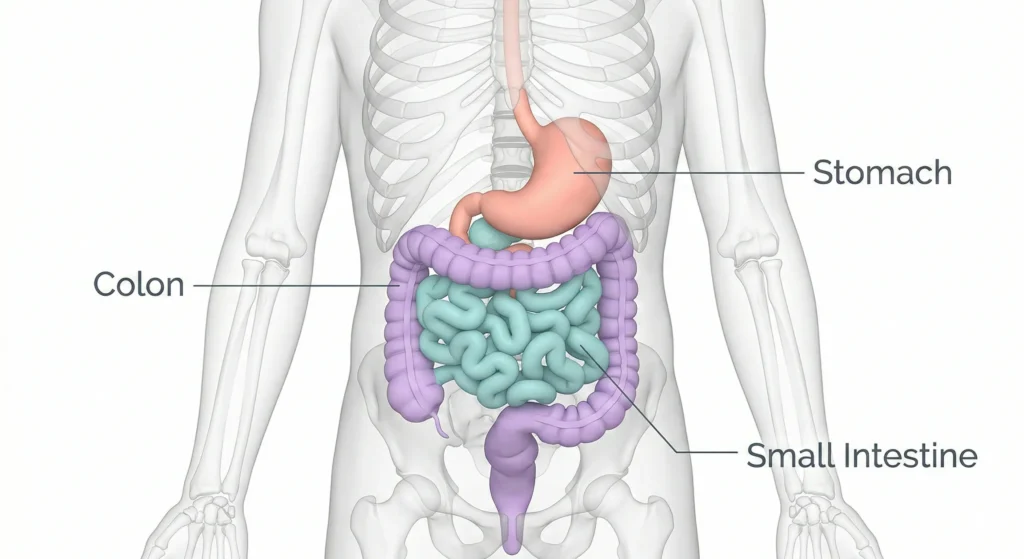
The digestive system is essentially a continuous, 8-to-9-meter-long muscular tube that starts at the mouth and ends at the anus. Its primary jobs are to break down food, absorb vital nutrients, and eliminate waste.
The main components include the mouth, esophagus, stomach, small intestine, large intestine (colon), and rectum. It is also supported by accessory organs: the liver, gallbladder, and pancreas.
1. The Role of the Stomach Located between the esophagus and the small intestine, the stomach is a muscular sac that physically churns food (mechanical digestion). For chemical digestion, it secretes hydrochloric acid (HCl) and a protein-digesting enzyme called pepsin. This strong acid environment kills harmful microbes and prevents infections. The stomach then gradually releases the processed food into the small intestine. Note: If stomach acid is too low, it can lead to bloating, indigestion, nutrient deficiencies, and surprisingly, acid reflux.
2. The Role of the Small Intestine At about 6 meters long, this organ consists of three parts: the duodenum, jejunum, and ileum. It is the heavy lifter of your digestive tract, handling 90% of your nutrient absorption. It absorbs proteins, fats, carbs, vitamins, and minerals, while receiving bile from the liver and digestive enzymes from the pancreas. Tiny, finger-like projections called villi increase the surface area to maximize absorption. Any damage to these villi results in malabsorption.
3. The Role of the Large Intestine (Colon) This 1.5-meter organ is the headquarters of your microbiome. It absorbs water, forms stool, and houses the vast majority of your gut bacteria. These bacteria produce essential short-chain fatty acids (SCFAs) that support overall immune function. Experiencing constipation or diarrhea indicates an imbalance in this critical area.
What is the Microbiome?
The gut microbiome is the massive collection of bacteria, viruses, fungi, and microbes residing in your digestive tract. It is estimated that you harbor around 38 to 40 trillion microbes, giving you a completely unique microbial fingerprint.
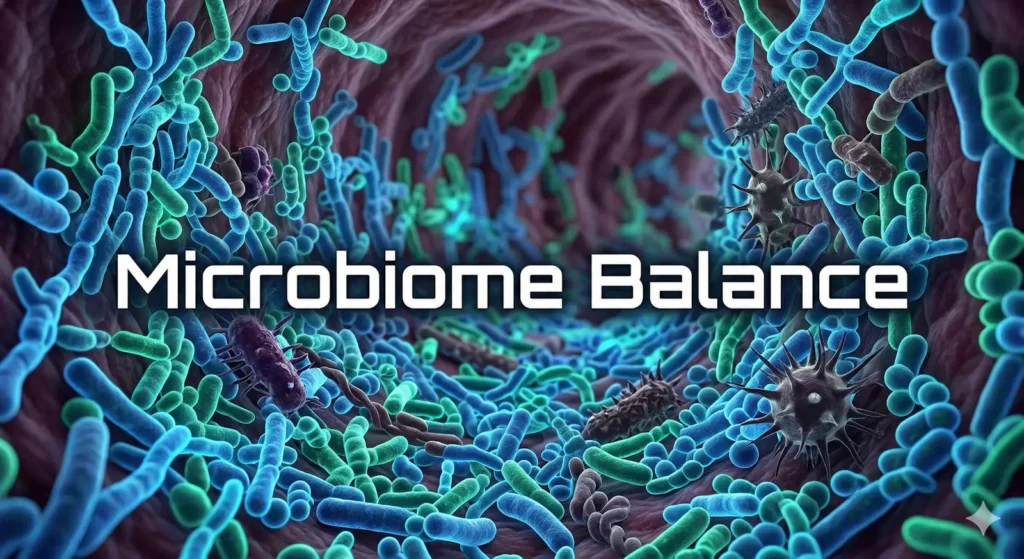
Your microbiome actively works to digest fiber, produce vital vitamins (like B12 and K), regulate your immunity, and control inflammation. It even influences your mood via serotonin production and impacts your weight and metabolism.
Good vs. Bad Bacteria Science doesn’t strictly divide bacteria into “good” or “bad”—it is entirely about balance.
- Beneficial bacteria: These produce short-chain fatty acids, protect your gut lining, reduce inflammation, and crowd out harmful pathogens.
- Harmful bacteria: When overgrown, they produce toxins, increase inflammation, damage the gut lining, and cause symptoms like bloating and IBS.
When this delicate ecosystem falls out of balance, it is called dysbiosis. Common culprits behind dysbiosis include antibiotics, chronic stress, processed foods, excess sugar, alcohol, a lack of dietary fiber, and chronic illness.
Understanding Leaky Gut & Systemic Inflammation
The medical term for “leaky gut” is increased intestinal permeability. Your gut lining is an incredibly thin, single-cell-thick barrier that acts like a highly regulated security gate. It is made up of tight junction proteins, immune cells, and a protective mucus layer.
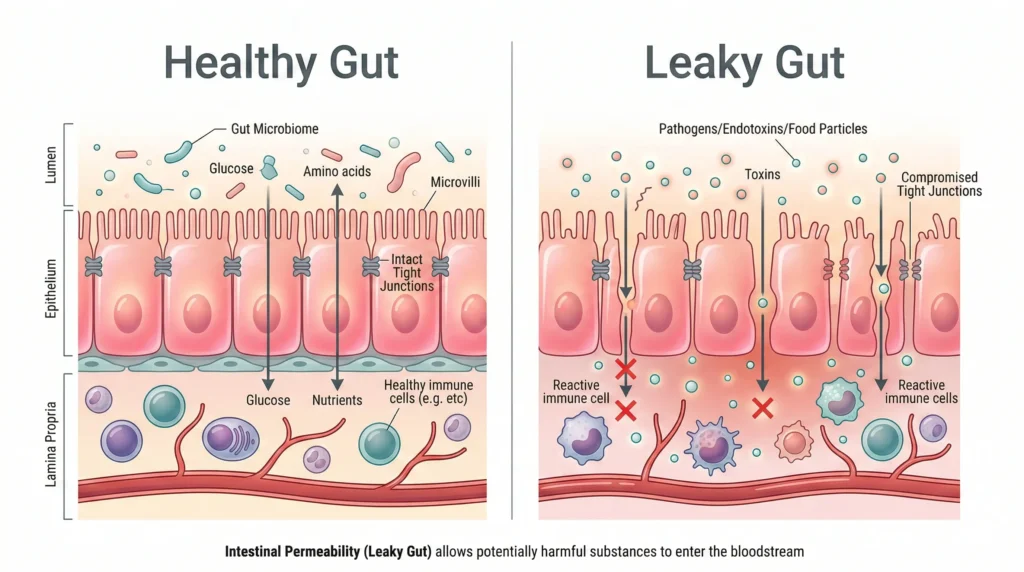
Under normal circumstances, only fully digested nutrients are allowed to pass through. However, when inflammation strikes, those tight junctions weaken, creating tiny gaps between the intestinal cells. This allows undigested food particles, toxins, and bacteria to bypass the barrier and enter your bloodstream.
Because 70% of your immune system resides in your gut, this breach causes your immune system to overreact, triggering systemic, chronic inflammation. This inflammatory cascade is the root cause of food sensitivities, brain fog, fatigue, and skin issues. It is highly associated with autoimmune responses, metabolic disease, hormonal imbalances, IBS, Type 2 diabetes, thyroid disorders, PCOS, depression, and skin pigmentation disorders.
The Ayurvedic View: The Concept of Agni
In Ayurveda, digestion is governed by Agni, or your digestive fire. Agni is the master controller that determines how well your food is digested, how nutrients are absorbed, and how efficiently toxins are eliminated.

Ayurveda categorizes Agni into 4 distinct types:
- Sama Agni (Balanced): Characterized by strong digestion, regular stool, and clear skin.
- Vishama Agni (Irregular): Often linked to a Vata imbalance, resulting in gas, bloating, and constipation.
- Tikshna Agni (Sharp): Linked to a Pitta imbalance, causing acidity and loose motions.
- Manda Agni (Slow): Associated with a Kapha imbalance, leading to sluggish digestion and weight gain.
If your Agni weakens, your body begins to form Ama. Ama is undigested metabolic waste, or toxins, which accumulate and lead directly to inflammation and disease. For millennia, Ayurveda has taught that this gut imbalance is the root of all disease.
The Integration: Modern Science Meets Ayurveda
When we overlay modern clinical science with ancient Ayurvedic wisdom, the parallels are striking:
- Modern Science says microbiome balance controls inflammation; Ayurveda says Agni controls digestion and immunity.
- Modern Science points out that intestinal permeability triggers immune activation; Ayurveda states that the accumulation of Ama leads to inflammation.
- Modern Science proves gut bacteria influence metabolism and mood; Ayurveda maps how Dosha imbalances directly affect your specific digestion pattern.
The Unified Translation:
- Agni = Your digestive enzymes, stomach acid, and metabolic fire.
- Ama = Inflammatory metabolites and undigested toxins.
- Dysbiosis = A Dosha imbalance.
- Leaky Gut = A weak intestinal barrier.
Both systems, separated by thousands of years, agree on one undeniable truth: Digestion is the root of health.
Comments are closed