
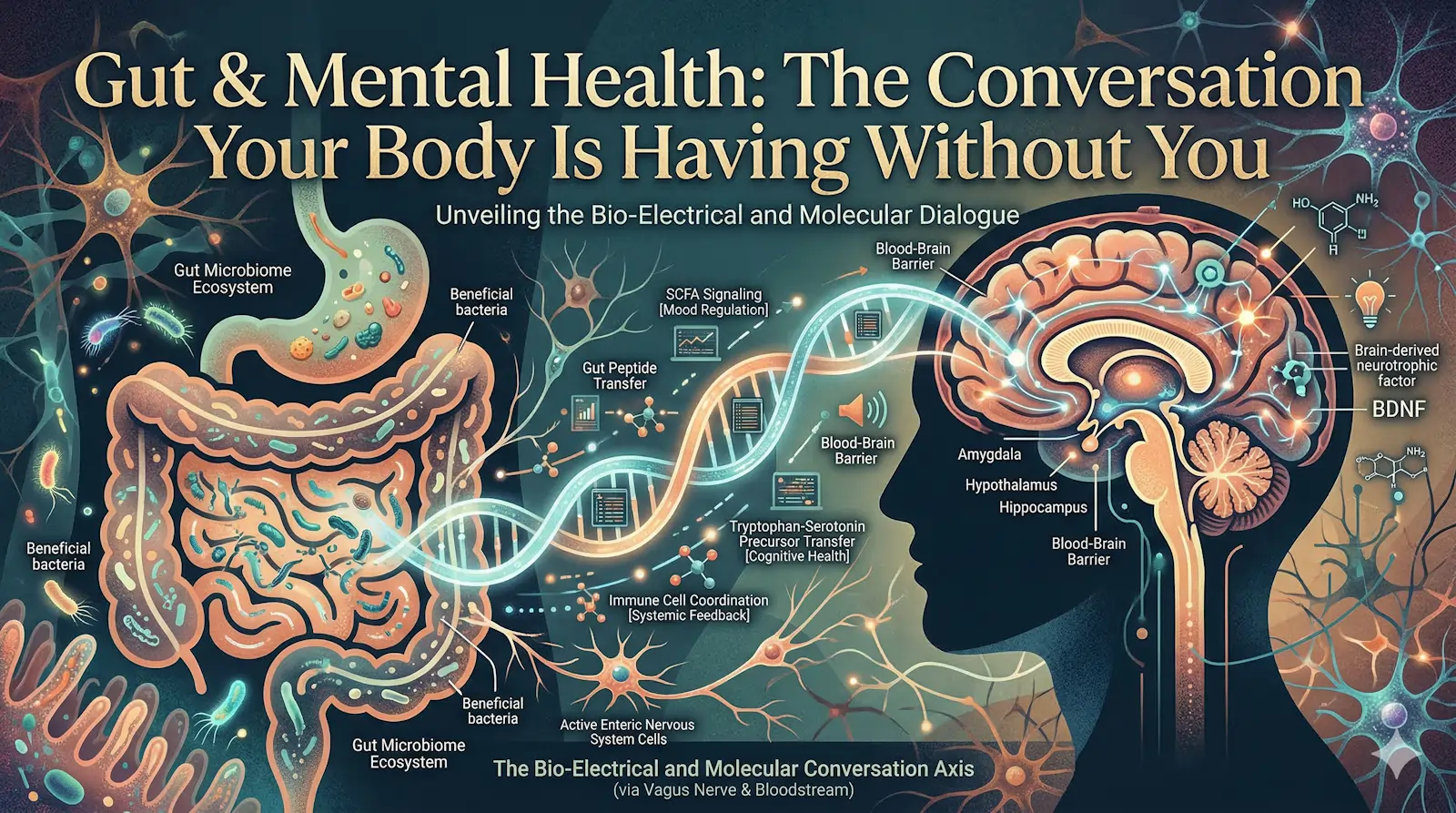
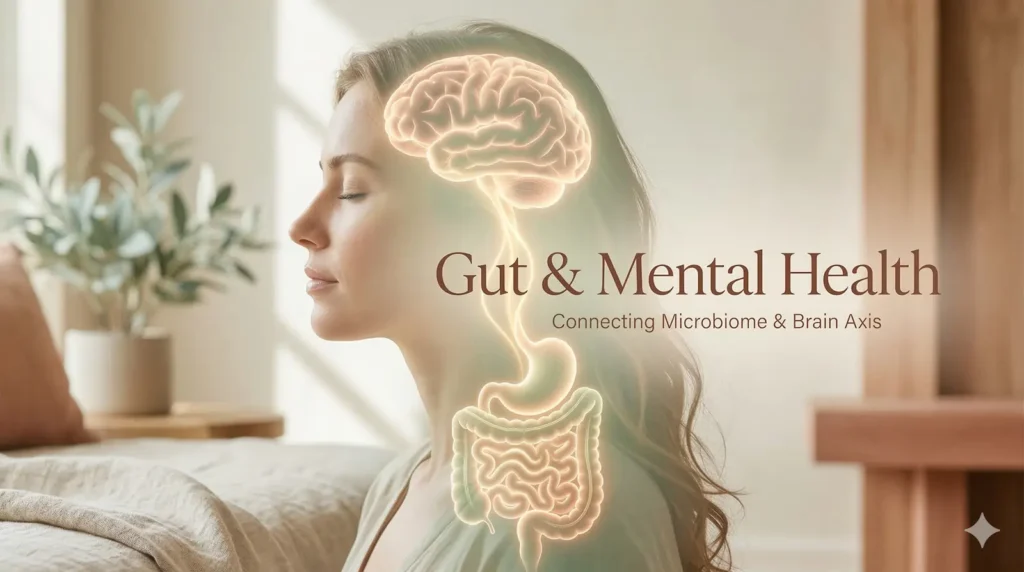
It was 2:17 AM. The house was silent, but her mind wasn’t. Could your late-night worries actually be coming from your stomach? The link between your gut and mental health is undeniable. Discover how the gut-brain connection drives gut microbiome anxiety and learn exactly how to heal your gut for mental health naturally.
She lay there with her eyes open, staring at the ceiling, replaying conversations from days ago and worrying about things that hadn’t even happened yet. She felt exhausted, but sleep was nowhere close. By morning, she would call it stress. By afternoon, she would call it just a bad mood. And by evening, she would ignore it again—because that’s what most of us do. We explain away what we don’t understand.
But What If It’s Not Just in Your Head?
For years, mental health has been boxed into one place: the brain. Low mood? A brain issue. Anxiety? Brain chemicals. Depression? A brain imbalance.
While the brain certainly plays a role, here is what most people don’t realize: your gut and your brain are in constant conversation. Not occasionally. Not sometimes. Every single second. And sometimes, the gut speaks much louder than the brain.
The Second Brain You Didn’t Know You Had
Deep inside your digestive system lies something extraordinary: a network of over 100 million nerve cells. Scientists call it the enteric nervous system, but many call it something simpler—your “second brain.”
It doesn’t think like your brain. It doesn’t solve complex problems or make executive decisions. But it feels, it senses, it responds, and most importantly, it communicates.
The Gut–Brain Highway
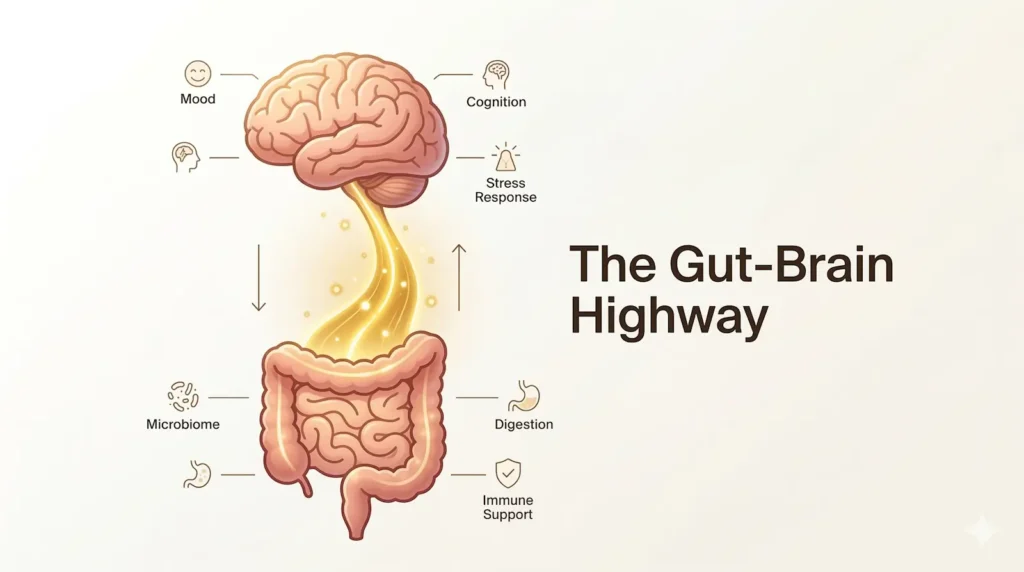
There is a direct physical connection between your gut and your brain called the vagus nerve. Think of it like a bustling, two-way highway. Your brain sends signals to your gut, and your gut sends signals back to your brain.
When you feel “butterflies” before a big event, or that heavy, sinking feeling in your stomach during a stressful moment, that is not your imagination. That is biological communication.
Her Turning Point
She didn’t go to a therapist first; she went to a doctor because of her stomach. She was dealing with constant bloating, random acidity, and a heavy, uncomfortable feeling after meals. She assumed it was just poor digestion.
But when the doctor asked her about her sleep, her mood, and her energy levels, she paused. Suddenly, all the fragmented pieces of her health started to connect.
The Science (Explained Simply)
Here is where it gets fascinating. Your gut produces around 90% of your body’s serotonin—the chemical famously known as the “feel-good hormone.” Yes, 90%. Not in your brain, but in your digestive tract.
Serotonin directly affects your mood, your sleep, your appetite, and your emotional stability. When your gut is unhealthy, your serotonin production is compromised, which means your mood is directly affected, too.
The Invisible Imbalance
Inside your gut lives your microbiome—an ecosystem of trillions of bacteria. When balanced, they help you feel calm, think clearly, and sleep deeply.

But when they become imbalanced due to chronic stress, poor diet, antibiotics, or a rushed lifestyle, harmful bacteria increase, inflammation rises, and neurotransmitter balance gets disturbed. Slowly, you start feeling anxious without reason, irritable over small things, and low without understanding why.
It Didn’t Start With Anxiety
Looking back, she realized her mental health didn’t decline overnight. It started with skipping meals, eating in a rush, drinking too much tea with too little water, staying up late, and routinely ignoring her digestive issues. Her gut was struggling long before her mind began to race.
Stress Works Both Ways
We often say, “Stress is affecting my gut,” which is entirely true. But the reverse is equally true: an unhealthy gut can actually increase your stress.
When your gut is inflamed, your cortisol (stress hormone) increases, brain signals become irregular, and emotional resilience plummets. As a result, even small, everyday situations start feeling completely overwhelming.
The Food–Mood Connection
Have you ever noticed feeling heavy, dull, and unmotivated after eating highly processed junk food, but lighter and clearer after a simple, home-cooked meal? That is not just about calories; that is your gut reacting in real-time. Certain foods either support your mental clarity or actively increase brain fog and irritability.
Her Healing Didn’t Start With Therapy
Her path to feeling better started with small, seemingly ordinary changes. But they worked.
- Step 1: Fixing Her Morning: Instead of starting the day with tea on an empty stomach, she began with warm water and a simple, nourishing breakfast. Within days, her acidity reduced. Within weeks, her energy shifted.
- Step 2: Eating Without Distraction: No phone. No scrolling. Just food. It felt strange at first, but slowly, her digestion improved. Then, something unexpected happened: her mind felt noticeably calmer after meals.
- Step 3: Feeding the Right Bacteria: She added homemade curd, fresh fruits, seasonal vegetables, and seeds to her diet. These nourished the beneficial bacteria in her gut, and as they thrived, her mood began to stabilize.
- Step 4: Reducing the Noise: This meant less late-night scrolling, more quiet time, and prioritizing sleep. Your gut heals best when your nervous system feels safe.
What Science Is Now Confirming
Research in the emerging field of psych biotics shows that specific gut bacteria can actively reduce anxiety, improve mood, and support a healthier stress response. Studies even suggest that improving gut health can be as impactful as traditional mental health approaches for mild to moderate cases.
Signs Your Gut Might Be Affecting Your Mental Health

If you are trying to understand your body’s signals, these are the red flags you should never ignore:
- Frequent bloating or digestive discomfort
- Sugar cravings (especially during stressful moments)
- Persistent brain fog
- Poor, unrefreshing sleep
- Mood swings without clear triggers
- Feeling inexplicably anxious after meals
These are not separate issues; they are connected threads of the exact same story.
The Emotional Realization & The 3-Month Change
The most profound shift she experienced wasn’t just physical—it was emotional. She stopped blaming herself. She stopped asking, “Why am I like this?” and started asking, “What is my body trying to tell me?” After three months of consistent, gut-focused care—with no extreme diets or complicated routines—her sleep improved, her anxiety reduced, and her energy stabilized. Life wasn’t perfect, but her mood became predictable and peaceful again.
A New Way to Look at Healing
If you are reading this as a mother, a professional, or simply a woman trying to feel better, let this be your reminder: Mental health does not just live in the mind. It lives in your daily habits, your food choices, your digestion, and your lifestyle.

Instead of asking, “How do I fix my anxiety?” try asking, “Is my gut supporting my mind?” Because sometimes, healing doesn’t begin with deep conversations. Sometimes, it begins with a balanced meal, a calm environment, and a healthy gut.
Final Thought on Gut and Mental health
Your body is always communicating with you—through your gut, your mood, and your energy. We have just been conditioned to only listen to the loudest signals. But if you start listening closely to the quiet ones, you might realize: Your gut has been trying to take care of your mind all along.
Comments are closed